-
Great idea: create scarcity around meeting time with wooden tokens. Can’t wait for these to go on sale. Although I might just make some myself. However, nowadays I’m not as swamped with meetings as I used to be. Which is a good thing, of course.
Author: Kars Alfrink
Designer turned design researcher. Postdoc at TU Delft. Exploring contestable AI.
links for 2007-10-19
-
The LIFT08 program looks great – they even have a full ‘track’ dedicated to gaming. But it overlaps with Interaction 08… Nooo!
links for 2007-10-18
-
Keith reacts to the ignorant comments on accessibility of SitePoint and Techcrunch visitors with some links to inspirational accessibility-related content.
links for 2007-10-17
-
A bit of a rehash of his earlier work titled ‘The Machine is Us/ing Us’ this video by Mike Wesch explains the alleged needlessness of categories on the web.
-
A bit of an alarmist video by Mike Wesch that nonetheless effectively communicates how students are forced to leave behind their media-saturated environment when they enter the typical classroom.
-
“Newtoon is a collaborative project between Futurelab and Soda Creative that is designed to encourage young people to explore the laws of physics in a creative and engaging manner through mobile gaming.”
-
An opensource clone of Guitar Hero. Srsly. Via Asbjørn.
Work with me in Copenhagen (or where-ever)

Now that I’m over three months into my stay in Copenhagen I thought it would be good to post a short update. Here are the facts, bullet-wise (with apologies to Mr. Tufte):
- I have been in Copenhagen, Denmark since July 1st 2007
- Until now I have mostly been working on Playyoo, doing interaction and game design
- I also presented on Playful IAs at the Euro IA Summit in Barcelona
- No later than July 1st 2008, I will return to Utrecht, the Netherlands
- Yes, I intend to continue freelancing when I get back (I officially left Info.nl on October 1st 2007)
- I am available for freelance interaction design gigs that involve social media, mobile technology and/or gaming
- You can also invite me to speak at your event or company, particularly on the topic of applying game design principles to the user experience of products and services
Oh and of course, if you happen to be in Copenhagen, don’t hesitate to drop me a line when you feel like going out for some drinks!
links for 2007-10-16
-
Juul points to the applicability of this year’s Nobel prize in economics – mechanism design theory – in MMOG design and asks wether anyone actually applies economic game theory. My guess is some savvy social software designers might.
-
“This is a collaborative project of The Guardian’s gamesblog community. The aim is simply to create the greatest group-generated text adventure in the world ever.”
-
“You really gotta do this.” On the virtues of active participation in the dev process as a designer. Totally agree with this,
links for 2007-10-14
-
Trailer for a cool-looking indie platform game involving the manipulation of a 3D level a la Crush…
-
Demo of a facetted navigation on steroids – using Flash to give additional feedback on each facet’s values.
-
Short piece by Shirky on the need for a balance between arrogance and humility and design.
links for 2007-10-13
-
Fun analysis of Katamari Damacy stating that because Katamari criticizes modern society, it is deserving of criticism itself.
-
Ian Bogost takes a closer look at what the term casual in casual games actually means and comes up with some interesting ideas on unexplored terrain in casual gaming. Specifically games that you play once for a short while, never play again and forget about.
Snacking on casual games
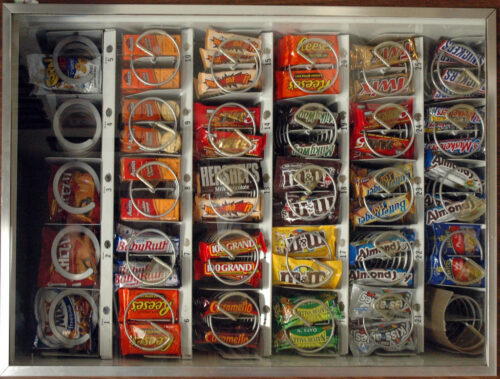
Following up on an earlier post about short-session games here are some comments on a recent Gamasutra article by Ian Bogost (it’ll be in the link post for tomorrow). It’s titled ‘Casual As In Sex, Not Casual As In Friday‘ and in it Bogost argues there is quite a bit of unexplored space in the casual games domain.
In the article, Bogost points out that casual games are usually seen as easy to learn but hard to master, like Go. They are commonly cheap (or at least cheaper than typical console and PC titles) and easy to get. Finally, control of the game is often simple and limited to few inputs. (Bogost recommends only using the mouse on the PC, I wonder what he’d recommend on a mobile…one button?)
Bogost points out that a typical casual game-play session might be short, but that the overall model of casual gaming (both the distribution and the game mechanics) actually encourage repeated play over a long period of time whereby a player achieves an increasingly higher level of mastery of the game (which arguably is the antithesis of casualness.)
What we rarely see are games that are explicitly created to be played once and never revisited. Bogost mentions September 12th and Zidane Head-Butt as prototypes for these types of casual games.
This is all very interesting to me because in a current project I have been discussing this notion of snack-sized games quite a lot. I am convinced there is a market for games that are consumed once and are then discarded, but there are some challenges to overcome. Bogost mentions these as well: They need to be ridiculously simple to access, as cheap as possible (ideally free) and instantly learnable.
One point Bogost doesn’t raise is: Who will feel compelled to create these games? Because game creation always involves some effort, typical game developers might not see much profit in releasing their games into the wild for free. What’s in it for them? I think the key there is the democratization of game creation. Giving ordinary users fun tools to create these short-session, snack-sized, casual-as-in-sex games as a form of personal expression.
links for 2007-10-12
-
If Doctorow’s goal with this piece was to scare people into not trusting Google anymore. He’s more or less succeeded with me.
-
Pretty impressive web-based photo-editor that does one thing Pixelmator doesn’t: Constrained cropping. Pulls in photos from Flickr and others. Very well-executed.
-
A toy that reacts to sounds. I want one!
-
Tom Armitage analyses the reactions of Flickr users to the Talk Like A Pirate Day version of the site. I wasn’t aware of the negative reactions of some (enjoyed it myself) but guess it makes sense.
-
Bernard Vehmeyer points to an excellent documentary film on copyright titled Good Copy Bad Copy and provides a great summary to boot. This docu deserves a wide spread, pass it along and while you’re at it donate some dough to the makers.