Week 149

I’m writing these notes on a train to Malmö for a change. I was there this wednesday and am back again to have a chat at Illusion Labs. I was put in touch with them by Hampus of The Astonishing Tribe, whom I visited on wednesday. TAT’s an interesting group, specialized in the design of innovative mobile UIs. Their Recognizr concept video made quite a splash in AR circles earlier this year. I once gave a lecture on playful UIs at their office and even though nothing concrete is in the works it would be interesting to collaborate some more on that topic some time.

On wednesday I also met up with my friends at InUse, whom I did some work with when I was last in Copenhagen. That project dealt with applications of multitouch in a real-estate project. Over a Lebanese buffet lunch Mijo and I mostly mused on what’s changed in UX consulting land the past few years and how that might develop into the future. We talked about ‘peak complexity’, the internet of things and strategies for designing deeply networked things. Good stuff.

To wrap up that day, I had a surprise meet-up with Karin of Ozma, (again thanks to the awesome connecting powers of Hampus). Ozma is a game design studio working very much in the same spirit as Hubbub, with a focus on “gaming beyond the screen”. It was very encouraging to discover a company that’s been successfully working in this space for the past four years. (And they’re not the only one, in Sweden alone there’s also Fabel, The Story Lab and Grul…) One of the things we talked about is a cool platform they’re developing for urban games that is not GPS-based, but runs entirely on SMS and is therefore very useful for working with target audiences who do not have access to high-end phones (i.e. teens and tweens).

That wednesday I headed back to Copenhagen, my mind suitably blown, as you can probably imagine.

…

Other than that I have been enjoying Socialsquare‘s hospitality on the Vesterbrogade. Martin, Magnus and I spent some time hashing out the details of the workshop we’ll be doing and we managed to narrow down the questions we’d like to answer to a manageable set. I’m keen on having part of this project’s output be shareable with the world; in what shape or form we have yet to determine.

My active involvement with Layar has gone on hold for the time being, but at the same time the first bits of my work for Layar are finding its way into the world. They’ve launched a new version of their app, which now supports paid content. (Android is out, iPhone should follow soon.) This was one of the first things I worked on for them, before moving on to stuff that’ll hopefully see the light of day somewhere over summer. Designing the paid content stuff involved dealing with a ton of dependencies on processes behind the scenes. It was an interesting challenge to make it as frictionless as possible. Plus, the mobile payment ecosystem is itself an interesting beast to deal with for a while. I also found myself designing for several mobile platforms at the same time, which can really mess with your head; both Android and iPhone have their own ‘grammar’ of interaction (or more precisely, one of them has something resembling a proper grammar, the other’s is more accurately described as a pidgin). So designing in parallel for both is a bit like speaking two languages at the same time. Confusing, even to a Dutchman.

All this, plus some more Skype calls with my HKU students (remind me to share some details on their work next time), another Skype session with the U-Turm group and the very final preparations for This happened – Utrecht #6 took up week 149.
links for 2010-05-06

  • “The Facadeprinter is a simple, software controlled robot. It consists of a two axis turn table and an airpressure printhead. The printer shoots the artwork from a distanced position dot by dot onto the chosen area.” Crazy stuff, the things it ‘prints’ have a very distinct esthetic.
  • “GameCamp is a gathering for the people who are building that world [a world with ubiquitous video gaming]. It’s for the designers, coders, artists, writers, thinkers and players who are making the 21st century the century of the game. GameCamp is about more than making games: it’s about playing them, thinking about them and how they affect our lives for good or for ill.” Sounds like an event I’d like to see happen in NL some time.

links for 2010-05-04

Week 148

So, the first full week of working in Copenhagen is behind me. I’ve mostly been working from our apartment in Nørrebro. Which is fine for now but I am looking forward to getting out more, and maybe doing some coworking here and there. Wouldn’t want to turn into a real hermit here.

Let me have a look at my calendar, what’s been going on?

Ah, so I had a meeting with Martin and Andreas of Social Square (at the very charming Granola, where they serve very tasty mixed juices, by the way). We’ll be doing a multiple day workshop to look at their design process and discover ways to use play as a tool for working with clients. The session is scheduled to take place in a few weeks. I just need to develop a more detailed plan for the session.

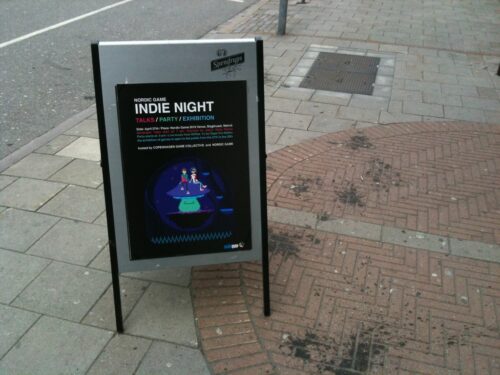
Nordic Game Indie Night

I crossed the Øresund on tuesday evening to attend the Nordic Game Indie Night, which was organized by the Copenhagen Game Collective (whose Darkroom Sex Game I’ve blogged about here before). There were six games on display, all from Scandinavian creators. There was free beer. And there were a few talks, of vastly differing depth and entertainment value. The setup was nice though: the games’ creators talked about each others work. The only problem was that many weren’t very articulate, and shied away from actually criticizing games. Some, though, like the guys from D-Pad Studio, really took the time to analyze a game on different levels. Others, like Cactus, seemed more interested in drinking beer. However, Cactus’s game Tuning was my favorite of the bunch, for its sheer mind-fuck awesomeness.

Apart from this, I’ve continued work on Layar, had another round of mentoring chats with my students and made some more preparations for This happened – Utrecht #6. We opened registration for the latter on monday, by the way, and were fully booked in 58 seconds (and had some server wonkiness in the process). Crazy, crazy stuff.

links for 2010-04-28

  • “a multi-player spell dueling game designed for the physical game controllers. The game lets players sling spells at one another in a game of dexterity and strategy. Using their controller as a wand, players draw fluid, emergent gestures – in their own personal style – to charge up spells of different magic types. But unlike many other gestural console games, Tryl pushes players to look at each other, rather than at the screen. To succeed, players must “read” their opponent and time their spells carefully.” That sounds pretty rad.

links for 2010-04-24

Week 147

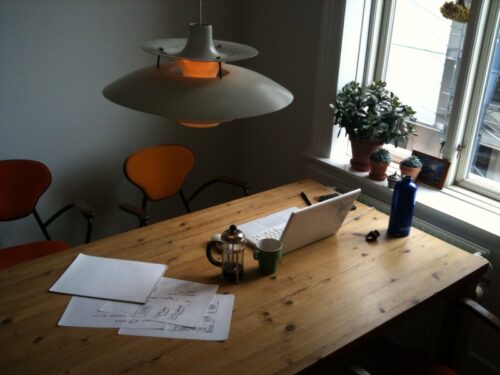
Well, the volcano did mess with my flight. Despite that, I am still writing this from an apartment on Birkegade in CPH, where I’ll be spending the coming 5-6 weeks. Here’s what my workspace looks like:

What my CPH work space looks like at the moment

Traveling here took up the whole of wednesday. We went by train; Utrecht to Duisburg, Duisburg to Hamburg, Hamburg to Copenhagen. They put our train on a freaking boat for a bit. That was different.

So I’ve been settling in. Getting a bike, reconnecting to old haunts, that sort of thing (I was here for a year in 2007-2008).

Apart from that, I’ve been taking care of some last bits of work for Layar, doing some prep for This happened – Utrecht #6 (registration opens Monday!) and talking to my HKU students. I also had a first meeting with a group of MediaLAB Amsterdam students who are creating a playful urban projection for ISEA2010 in Dortmund.

Now, if you’ll excuse me, I have a city to explore.

links for 2010-04-23

  • “…we’re going to encounter a bunch of crappy sorta-games foisted on us. Those rudimentary game schemes are going to be rolled out by everyone with a rewards card, CRM system, loyalty scheme or something that can be plotted on a graph. And they’re going to be no fun.” I agree with Russell that the gamepocalypse runs the risk of being incredibly boring if people keep focusing on sticking a reward system on a mundane activities. At the core of any good game is an interesting activity, so we should be thinking about those, the many kinds of experiences people have and how those can be turned into games. Rewards are nothing more than feedback, and feedback can take on many forms, so let’s see if we can come up with things other than a score or a badge, shall we?
  • “If you’re running a city, though, there’s stuff here you probably ought to be paying attention to. The message is that in the long run you’re clearly better off underwriting a vibrant ecosystem of [coworking spaces] than shelling out one tax break after another in the hopes of enticing (or retaining) corporate headquarters.” However much I am a fan of coworking, it does not work well for many creative activities which require a proper studio space where one can physically engage with materials.

Announcing This happened – Utrecht #6

Last week we announced the sixth edition of This happened – Utrecht. The program was up on our Dutch site already, here’s the program in English (soon available on our international .org site, too). As always I am very excited about the line-up. Can’t wait to hear what stories these people have to share about their work. Doors open on Monday 10 May at 7:30PM. The registration starts on Monday 26 April at 12:00PM. See you there!

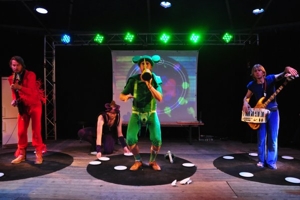
Keez Duyves is one of the cofounders of PIPS:lab, based in Amsterdam, NL. Archie and the Bees, their newest theatrical concept, links the primary colors red, green and blue to the primary elements of rhythm: kick, snare and hi-hat. In this hybrid of multimedia performance and installation, PIPS:lab demonstrate their revolutionary Radarfunk machine – allowing them to generate sound from color. A light painting or the colors in the audience serve as musical basis over which PIPS:lab improvise and amaze with their other self-developed instruments: the Bashblender, the Grinder and the LCDC video guitar.

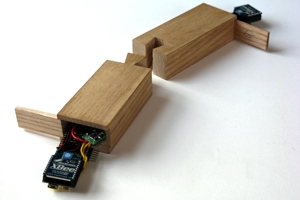
Matt Cottam is the founder of Tellart. Wooden Logic represents the first phase in a hands-on sketching process aimed at exploring how natural materials and craft traditions can be brought to the center of interactive digital design to give modern products greater longevity and meaning. It is only in the past decade or so that the community and tools have evolved to the point that designers can sketch with hardware and software; which before that was the sole domain of engineers and computer scientists. This project seeks to combine seemingly dissonant elements, natural, material and virtual, and explore how they can be crafted to feel as if they were born together as parts of a unified object anatomy that is both singular and precious.

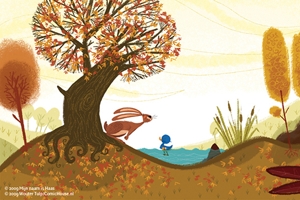
Sanneke Prins and Berend Weij are co-founders of Mijn naam is Haas, a company that produces a range of educational products aimed at primary education. These products are all situated in the world of the main character Haas. The range consists of illustrated children’s books, CD-ROMs and an online learning environment, in which the vocabulary of toddlers is increased through game principles. Children create the world of haas by drawing. All drawing actions directly influence the unfolding story, so each play session is unique which makes the game continuously engaging. In this creative process language elements are presented in a playful manner. The first version of the game was created by the founders during their attendance of the EMMA program at the HKU.

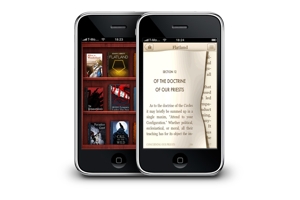
Sebastiaan de With is an interface and icon designer working under the name Cocoia. He designs, teaches and runs a popular blog on interfaces and icons. Sebastiaan is easily recognized in Drachten wearing his Exploded Settings Icon or Bricky shirt and toting an iPad. Classics is one of the first popular e-readers on the iPhone, offering public domain books in a well-designed experience. The project was initiated by the Phill Ryu, (in)famous for MacHeist and his support of the Delicious Generation. Clearly the Classics app is a feat of design driven development, complete with an inspired wooden bookshelf, curling page turns (both now also available on the iPad), marvelous icons and a collection of lovingly designed book covers.

We wouldn’t be able to pull off this edition with the support of the Utrecht School of the Arts and Microsoft Design Toolbox. Thank you!