-
A Dutch company that develops tangible interactive toys for educational purposes. Their first product is TagTiles, a tablet that responds to play pieces.
Author: Kars Alfrink
Designer turned design researcher. Postdoc at TU Delft. Exploring contestable AI.
links for 2009-11-03
-
I am taking a day off and watching all of these. Looks to be bloody brilliant stuf. I am jealous of the Umeans.
-
An excellent writeup by Iskander of the fourth edition of This Happened – Utrecht. Interesting how he keeps finding themes while we plan none.
What the hubbub is
There’s some movement over at the website for my new venture. I mentioned Hubbub before: it is a design studio I am setting up for physical, social games that are played in public places. We hope to address social issues and the like using these games.
Recently…
- I’ve adjusted the temporary site to fit with the brand that’s being developed by my friends at BUROPONY.
- I’ve posted a write-up of this game we did for Your World in Rotterdam.
- I’ve posted a transcript of a lecture I delivered under the banner of Hubbub at a recent event on social games and media literacy.
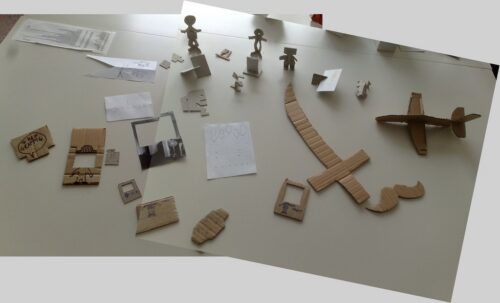
Also, we’ll be doing something playful and running a workshop at the upcoming Game in the City conference in Amersfoort.
To stay posted on Hubbub developments, follow us on Twitter or sign up for our newsletter. There’s good old RSS as well, of course.
links for 2009-10-28
-
Bleecker and Nova argue for an alternative to the synchronous, real-time city. I can definitely get behind the idea that there is more to city experience than the hygienic, computational model that is currently being imposed by technologists. Also, the examples they show from their own practice are inspiring works that demonstrate the value of thinking through making.
-
An interesting take by urbanists on urban games: “The big issue of urban games is the sudden appearance of unexpected actions within an urban context. The public space is reset and reinterpreted as a playground for adults. The disturbing role that those games have on ‘normal’ space use, seems to be the main purpose. In the context of the flexible city the games show the need of another perception of space. Organisers must be sick of formal city forms and legislative terms of use. The city has to become fun again, not as a playing field for civil servants making plans, but for people using it.” The whole blog seems worth following actually, if you’re interested in new forms of city planning.
-
A Dutch article on the state of the serious games industry. A pretty decent overview, with just a few minor inaccuracies: Surgeons who practice using Trauma Center on the Wii? Not likely. Also, it’s a shame the researcher of TU Delft who is quoted says games need to have appealing visual design, but neglects to mention the importance of proper game play design…
links for 2009-10-25
-
Paper is a wonderful ‘platform’ for social games at conferences. Here’s another example of a game idea involving sneakiness.
links for 2009-10-23
-
What a wonderful resource for physical games designers: quote after quote from diverse sources that illustrate uses of touch across cultures and times. Via Mr. Webb.
links for 2009-10-22
-
“Social means showing off and sharing, and politeness and play, yes. But social also means healthier, wealthier and happier, and that’s a big, big deal. I believe that’s why social matters.”
links for 2009-10-20
-
The guys at BUROPONY have started blogging. This first post outlining some of the thinking behind their own identity is a nice example of their approach to things: based on crafting physical materials and playfulness.
links for 2009-10-19
-
Chris quotes Bridget Riley on sketching who in turn quotes Stravinsky on constraints.
-
Starting small, making sure participating is worthwhile to the first few, all things that seem so logical but are so easy to forget once you’re deep into something.
links for 2009-10-16
-
Although I see a lot to agree with here (providing access to city data is a good thing). I can’t help but wince at the techno-optimism oozing from this piece. The author seems to think the average citizen is fluent in datamanipulation. Geeks are also flocking to this city as a platform stuff because it’s shiny new tech. But they’re forgetting about all the mundane infrastructures regular people are already dealing with, and need help with, which the techno-elite have forgotten about, since, well, it’s gotten bored with it.