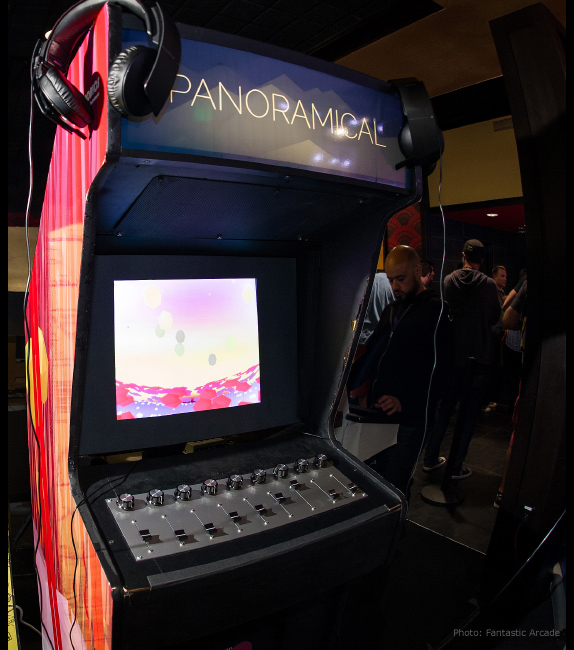
Glitch Tank (by smestorp)
Because of the previous post, a plug for Glitch Tank—put it on your iPad and play it with a friend.
(Source: https://www.youtube.com/)
Glitch Tank (by smestorp)
Because of the previous post, a plug for Glitch Tank—put it on your iPad and play it with a friend.
Really a lot of the reason I’ve stuck with iOS for a while is the multiplayer games. This is what got me into this in the first place, it’s something I got really excited about for a while, it’s so perfect for them but there are very few and they don’t do well. I think a lot of people just don’t realise that they’re carrying around multiplayer consoles everywhere they go? Culture.
Mighty Vision: why am i making games for ios
Glitch Tank remains one of my favourite iPad games. It is indeed a shame there aren’t more multiplayer games like it, and those that do exist aren’t rewarded in the market place.
Like its techno-automotive cousins Tesla and Uber, services like Silvercar represent a shift from designing products and services to support a general population to focusing on an elite capable of wrangling, negotiating, or paying their way out of the drudgery of ordinary life.
These are the things I referenced in my Behavior Design AMS talk. A full writeup will probably follow at some point. Followers of this blog will recognise many previously posted things.
Structurally then, the American cloud is an assemblage of interconnected Hamiltonian cathedrals, artfully concealed behind a Jeffersonian bazaar. The spatial structure of this American edifice is surprisingly simple: a bicoastal surface that is mostly human-habitable bazaar, and a heartland that is mostly highly automated infrastructure cathedrals. In this world, the bazaars are the interiors of cities, forming a user-interface layer over the complex tangle of pipes, cables, dumpsters and loading docks that engineers call the last mile — the part that actually reaches the customer. The cities themselves are cathedrals crafted for human habitation out of steel and concrete. The bazaar is merely a thin fiction lining it. Between the two worlds there is a veil of manufactured normalcy — a studiously maintained aura of the small-town Jeffersonian ideal.
America’s artificial heartland– Venkatesh Rao – Aeon
For some reason this time around I was less entertained by Rao’s choice of metaphors. Perhaps because this is yet another dichotomy, and because as opposed to previous attempts at illuminating today’s world, I didn’t learn much new from them. I could not think with these metaphors as tools.
Play is the unknown and the uncontrollable, and by building an ontology based on designer-centric reason, the proceduralists eliminate the myth and the ritual from play, and encourage an instrumental approach to games that is exclusively guided by the rules, norms and processes embedded in the game system.
Game Studies – Against Procedurality
Revisiting Sicart on “the proceduralists” and quite enjoyed it. There are many seeds here for a form of “player-centric” applied game design which allows for creative, generative play.
I believe that much of the weak commentary on the New Aesthetic is a direct result of a weak technological literacy in the arts, and the critical discourse that springs from it. It is also representative of a far wider critical and popular failure to engage fully with technology in its construction, operation and affect. Since at least the introduction of the VCR – perhaps the first truly domesticated computational object – it seems there has been a concerted, societal rejection of technical understanding, wherein the attitude that “I don’t understand this and therefore don’t like this and therefore I will not investigate this” is ascendant and lauded. This attitude manifests in the low-level Luddite response to almost every technical innovation; in the stigmatisation of geek culture and interests, academic and recreational; in the managerial culture of economic government – and in the elevation of sleek, black-box corporate-controlled objects, platforms and services, from the iPhone to the SUV, over open-source, hackable, comprehensible and shareable alternatives. This wilful anti-technicalism, which is a form of anti-intellectualism, mirrors the present cultural obsession with nostalgia, retro and vintage which was one of the spurs for the entire New Aesthetic project; it is boring, and we reject it.
The New Aesthetic and its Politics | booktwo.org
Bridle pulls no punches and goes after art critics who do not know their tech. I guess it is unlikely all of them will change their ways and so for the foreseeable future we will have to repeat this argument again and again.
Hustlers, Hoaxsters, Pranksters, Jokesters and Ricky Jay (by 770pratik)
A great documentary on sleight-of-hand artist (and scholar) Ricky Jay. An intriguing character for sure, and a joy to watch when doing tricks.
What we are witnessing in the Netherlands, and across Europe, is the exploitation of the productive indeterminacy of culture and race “for the monopolisation of virtue and a defence mechanism against the loss of self,” both in an economic, and political sense—what Sherene Razack names “a way of purifying and regenerating one’s own race.”
“I Didn’t Mean To!” Tracing the Roots of ‘Dutch Innocence’ | Processed Life
Being a white, reasonably well-off Dutchman, this makes for some uncomfortable reading, not in the least because much of it rings true—there appears to be a lot of unexamined racism behind Dutch propriety.