Accessibility (a Euro IA theme)

It’s been a while, but here’s my final post on the Euro IA Summit. Usability has been a design value long championed by HCI professionals from which IA has partly developed. Naturally, they’ve often been responsible for ensuring usability in projects. There have been developments that force IAs to take a broader view and see usability as one of many values that go into a successful user experience on the web. Morville realised this quite a while ago and reminded us in his keynote of his user experience honeycomb.

Accessibility is one of those other values, and quite a few talks discussed it in some way.

For instance Fredy Oré’s talk on the project he did for Digital UK (the independent, non-profit organisation leading the UK’s move to digital television) contained quite a few examples of how he as an IA was faced with accessibility problems. From figuring out how to create a site structure that would support both English as well as Welsh to working around the limitations of a legacy CMS, there were many accessibility-related decisions to make.

Bogo Vatovec summarized the results from a test he did with several content adaptation solutions (mobile web browsing applications). The state of affairs in this area appeared to be quite sordid. Opera’s mobile web browser came out as the best option currently available. However, smart software will never be the silver bullet to solve all mobile web-browsing woes. We’ll need to build sites to be accessible for a broad range of devices. I feel we need to go even one step further and create alternative architectures specifically tailored for the mobile context.

Finally Steven Pemberton flexed his W3C muscles and overwhelmed the poor non-techy IAs with a deluge of information on new web standards such as XHTML 2 and XForms. The key takeaways for me were that the W3C is still pushing for a true Semantic Web (yes, uppercase). Example: Pemberton said XHTML 2 is “microformats done right”. Also, XForms promise to be a real alternative for other RIA technology, with the main benefit that it won’t need third party technology to be installed on the client.

So again, I expect IAs to be involved in more and more accessibility-related discussions. Accessibility is one of many design values that go in a user experience. These values should be prioritised for each project. Some might even put accessibility above usability. IAs could do worse than educate themselves on some accessibility basics.

This is the fifth and final post on themes spotted during the Euro IA Summit 2006. The first post was on strategy, the second on social search, the third on process & deliverables and the fourth on involving the client. My first post-summit post can be found here.
Involving the client (a Euro IA theme)

As an IA community we’ve spent an awful amount of time educating our clients about the worth of our work. In a lot of instances we were aiming at making the client be more like us. At the summit, it was interesting to see a number of speakers stress the importance speaking the language of your client and involving them in your daily work. Some examples: Olly Wright’s talk on strategy included such lessons as understanding your client has a boss and finding out what he or she wants, speaking $$$ €€€, the fundamental language of business and making your assumptions explicit. Jared Folkman pointed out we should stop talking about users and start using the word client (certainly when working on retail websites). Doing so, we’ve already started using some of our client’s language. I mentioned agile design and development earlier and do think that one of its points that stick out for me is the focus on face-to-face meetings with the whole team (including a client). Finally, Warren Hutchinson’s presentation workshop on how to run workshops was insanely useful for learning new techniques to loosen up and get real results in client meetings.

This is the fourth post on themes spotted during the Euro IA Summit 2006. The first post was on strategy, the second on social search and the third on process & deliverables. The final post will be on accessibility. My first post-summit post can be found here.

European IAs are three years behind on their US counterparts*

Warren Hutchinson thinks this year’s Euro IA Summit was way behind on the US big brother conference in both content and form. I can’t confirm or deny this (as I’ve never been to the US summit) but I’d say any summit is better than none, and it’s clear we’re still building a practice.

He also bemoans the prevalence of conservative, ‘little IA’ thinking and a passive consumerist attitude with the majority of conference goers. True as this may be, putting yourself on a pedestal looking down on those that have been less fortunate than you in their development and exposure to big IA (or EA) thought is hardly the most productive path to take IMHO. Also, Hutchinson implies he has a tighter bond to the US summit and in some ways seems to deny a relationship with the EU design community, which I feel is a bit suspect and in some ways perhaps symptomatic of UK design thought.

I’d rather see Hutchinson take up the challenge of being an example for European IAs, designers and whatnot, as he did with his great presentation on workshops (or is that workshop on workshops?) and not slap his eager students in the face because they haven’t yet gotten the point entirely.

Just to be on the safe side: please take some of this criticism with a grain of salt. Lets have a healthy constructive discussion.

* As you can tell I don’t agree (completely) with this post’s title, which is inspired by one of the comments on Hutchinson’s post by Jonathan Mulvihill.

Process & deliverables (a Euro IA theme)

So sooner or later, any designer working in the professional arena doing client work will start thinking about process. What are the actual steps you go through to get to a successful outcome? Are those steps always the same? (Most design gurus would like you to think as much.) Is there one true IA process? Some attempts were made during the summit to answer these questions, most notably during the process panel lead by my colleague Peter Boersma. This got a bit stuck in discussions on how the panellists’ companies developed and managed their process and not so much into the practicalities of their respective processes. A shame.

The second day of the summit was kicked off with a wireframes panel. Wireframes are maybe the most produced deliverable by many an IA. Deliverables are a natural fit to process, which usually consists of a description of activities, roles and artefacts.

Both RUP and Agile were frequently-used terms with a memorable observation by one of the people present that during their lifetime companies seam to fluctuate between big scary processes and loose small workflows. It’s clear that any design shop adopting RUP will need to slim it down and add a much-needed user centred design component. Agile sounds cool and exciting but really only is fit for a certain type of client (a fearless one).

On the deliverables side, it struck me again how poorly we as designers are equipped to model our intended architectures in such a way that clients get it and developers can pick it up and build it. Who will fill this void?

This is the third post on themes spotted during the Euro IA Summit 2006. The first post was on strategy, the second on social search. Other posts will be on involving the client and accessibility. My first post-summit post can be found here.

Social search (a Euro IA theme)

This could also be called ‘social findability’ (with apologies to Peter Morville). A lot of stuff has been said about both the dangers and virtues of tagging and their resulting bottom-up information architectures (aka folksonomies). IAs have been working hard to come up with practical ways of merging these with traditional taxonomies, to varying degrees of success. An Italian delegation showed off a cool demo of a facetted tagging application (FaceTag) joined with some solid academic theory (as far as I could tell). The BBC presented a poster on their way of slowly including tags into their controlled vocabulary using a combination of algorithms and old-fashioned human labour. These all point to the emergence of architectures that actually apply the concept of IA pace layering introduced by Morville in his latest book. I’m sure we’ll see more of these in future.

Besides harnessing the power of massive online amateur librarianship (MOAL), another hybrid that should be further investigated is the one resulting from combining social networks with search. There wasn’t much talk about this (Peter Morville briefly mentioned it in his keynote) but it’s definitely in the air. Social search has been experimented with in the web 2.0 arena, but I get the feeling not many IAs have been involved in the effort up till now. Most current endeavours feel like whiz-bang tech demos. Where’s the first useful and usable social search engine?

Speakers on social search during the summit: Peter Morville, Andrea Resmini, Emanuele Quintarelli, Luca Rosati and Karen Loasby (poster).

This is the second post on themes spotted during the Euro IA Summit 2006. The first post was on strategy. Other posts will be on process & deliverables, involving the client and accessibility. My first post-summit post can be found here.

Strategy (a Euro IA theme)

It’s fun to track trends in IA. A lot of IA thinking originates in user centred design. The case for balancing user goals with business objectives has been made for quite a while (one of the most clear examples is in Jesse James Garrett’s diagram). The concept of a strategic IA has been gaining critical mass. At the summit, there were plenty of speakers pointing out the importance of being able to make sure your designs are perceived as relevant within a business context. This means (some if not all) IAs will have to come to grips with icky subjects such as ROI and conversion. But it’s also an excellent opportunity to finally justify doing more research. Marketing has gotten this right a while ago. Research before and after the actual realization of an architecture will enable IAs to make more informed design choices and measure the success of those same choices when the architecture is built. Getting comfortable with tools and techniques ranging from analytics, online marketing experiments to surveys, ethnographic enquiries etc, will be essential for strategic IAs. After all, it’s all about the $$$ €€€.

Speakers on strategy during the summit: Eric Reiss, Olly Wright, Ariel Guersenzvaig and Jared Folkmann.

Final thoughts

  1. Eric Reiss is worried about strategic IAs loosing touch with traditional ‘little IA’ tactics. Is it realistic to expect IAs to be both expert strategists and tacticians?
  2. When we start to talk about users in stead of customers, won’t we loose sight of what they want to buy and only think of what we want to sell them?

This is the first post on themes spotted during the Euro IA Summit 2006, other posts will be on social search, process & deliverables, involving the client and accessibility. My first post-summit post can be found here.

Euro IA Summit 2006 themes

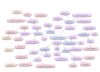
Euro IA Summit 2006 mind-map

The second European IA Summit has come and gone. The promised live updates from Berlin weren’t delivered due to the scarcity of power sockets and flaky WiFi (a lesson for the organization of next year’s event, IMHO). I do have a few hundred photos to go through, including the contents of my Moleskine (chaotic mind-maps of each talk, for the real connoisseur.)

All in all, the summit was great. It was nice to meet old acquaintances and make new ones. We had quite a few laughs because of language and cultural differences, which is what a European event is all about I guess.

It was encouraging to see that the number of attendees was considerably larger than last year. The variety of nationalities had also increased I think, which is good of course.

The contents of talks were of a pretty high standard, while presentation skills of the speakers varied widely, as could be expected. It’s a shame when high quality content becomes hard to grasp due to bad presentation, and we had a few of those, but I still respect anyone who had the courage to step up and express their views.

On the way back I created a mind-map of all the big themes I picked up on during the weekend and intend to delve into the main ones over the course of this week in a series of mini-posts. The first one will be on strategy; the follow-ups will cover social search, process & deliverables, involving the client and accessibility.

I’m a European IA

Tomorrow I’m off to the 2nd European IA Summit. This year’s conference will be held in Berlin. That’s great because I’ve never been there until now. I’m planning on doing some mind mapping of talks (inspired by Lars Plougmann) so keep an eye on the Flickr photostream during the weekend. Of course, I hope the organization has managed to get some open WiFi going (last year that was a bit of a problem). Convenient power sockets would come in handy too… See you there, or see you later!