learning how to think really means learning how to exercise some control over how and what you think. It means being conscious and aware enough to choose what you pay attention to and to choose how you construct meaning from experience. Because if you cannot exercise this kind of choice in adult life, you will be totally hosed
Author: Kars Alfrink
Designer turned design researcher. Postdoc at TU Delft. Exploring contestable AI.
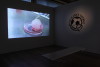
The final ball, which will produced by replicating the same techniques used to create artificial human organs, encourages us to consider the role life sciences will have in our daily lives today and in the future. It is also a reference to the colliding worlds of human enhancement, the bio-technology industry and the global capitalization of sport, which have become highly contested areas.

A service aimed at teasing out “meaningful stories” from its users. The main tool for this seems to be an ever-growing list of categorized questions, such as this, from the category Life: “What life lessons would you tell your 13 year old self if you had the opportunity?”
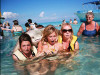
When it was taken, the photo would have been a funny and unusual picture of three terrified girls and a doofy-looking stingray. Today, the photo can be labelled a photobomb, which implies a narrative of surreptitious sabotage, connects the stingray to a whole tribe of obnoxious pranksters, and makes the ray look like his smile might contain a hint of frat-boyish dissolution. We’ve come so far.
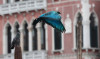
(via colorful pigeons amongst a flock of grey at the venice biennale)
Artists messing with animals – it seems like a never ending theme. The commentary in this blog post is worth browsing through. Julian Charriere and Julius von Bismarck have died pigeons in Venice so that people don’t consider them flying rats anymore…
The blog post notes they’ve painted these animals without harming them. Some of the commenters say painting these animals is harmful in itself. Reasons given include: camouflage and procreation. Other commenters are offended by artists seeking fame by exploiting these animals. I find the image striking and would like to learn more about the actual process the artists uses to achieve this effect. I’m also curious about the scientific basis for some of the claims made by those commenters taking offense.
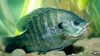
(via BBC News – Fish play video game in new behaviour study)
Not an actual game but a simulation – nonetheless interesting. Scientist study predatory behavior in fish using computer-controlled colored dots. They use the word “immersive”. I wonder if the pun was intended.
As Dave Winer noted, Medium does content categorization upside down: “Instead of adding a category to a post, you add a post to a category.” He means collection in Medium-speak, but you get the idea: Topic triumphs over author. Medium doesn’t want you to read something because of who wrote it; Medium wants you to read something because of what it’s about. And because of the implicit promise that Medium = quality.
Blogging for its relevance to project SAKE, where I am also struggling with finding alternative organizational schemes for contributions from players. A stream metaphor seems wrong. Also, we really want to incentivize quality over quantity (or frequency) of posts. Medium might have gotten a few things right, there.

Another SAKE reference point – National Novel Writing Month is an annual writing challenge. It isn’t about the quality of the writing, it’s simply about getting to 50.000 words in 30 days. I guess a large part of the fun comes from the knowledge that many others are doing the same thing as you are.

Prior art for Pig Chase that I was reminded of yesterday during Kevin Slavin’s talk at Playpublik. In Sharkrunners, human players try to intercept sharks with a digital boat. The digital sharks are controlled by GPS-tagged live sharks.
Meindert Fennema: ‘Vindt u het afschieten van herten zielig? U bent zeker Amsterdammer’ – Meindert Fennema – VK
Dutch but worth saving. Column criticizing the ban on shooting fallow deer in the Amsterdam area.